More businesses are using AI voice agents to handle calls, book appointments, and run customer support around the clock. When it works, it cuts costs and response times. When it doesn’t, customers hang up frustrated, and you’re left paying for infrastructure that breaks under load.
The problem is that “voice AI” means different things to different vendors. Some only offer text-to-speech. Some only do transcription. Very few handle the full phone call from start to finish. And almost none own the infrastructure they run on.
This article reviews the top voice AI providers in 2026, rated on real-world performance, features, pricing, and who each one is actually built for.
How We Rated Each Provider
Every provider below was evaluated on the same five criteria:
- Latency: How fast does the AI respond after the caller stops talking? Under 200ms feels natural. Over 500ms feels like a broken IVR
- Telephony: Does the provider own its own carrier network, or does it rely on third parties for calls?
- Full-stack coverage: Does it handle telephony, speech-to-text, LLM inference, and text-to-speech? Or just one piece?
- Compliance: Does it hold SOC 2 Type II, HIPAA, PCI, ISO, and GDPR certifications?
- Pricing: Is the pricing transparent and predictable at scale?
Voice AI Providers at a Glance
|
Provider |
Full Stack |
Owns Network |
G2 Rating |
Best For |
|
Telnyx |
Yes |
Yes |
⭐️4.7/5 |
Production voice AI at scale |
|
Twilio |
Partial |
Limited |
⭐️4.2/5 |
Teams already on Twilio |
|
Vapi |
Partial |
No |
⭐️4.2/5 |
Fast prototyping |
|
Retell AI |
Partial |
No |
⭐️4.8/5 |
Support and sales agent flows |
|
Bland AI |
Yes |
No |
⭐️5.0/5 |
Self-hosted enterprise |
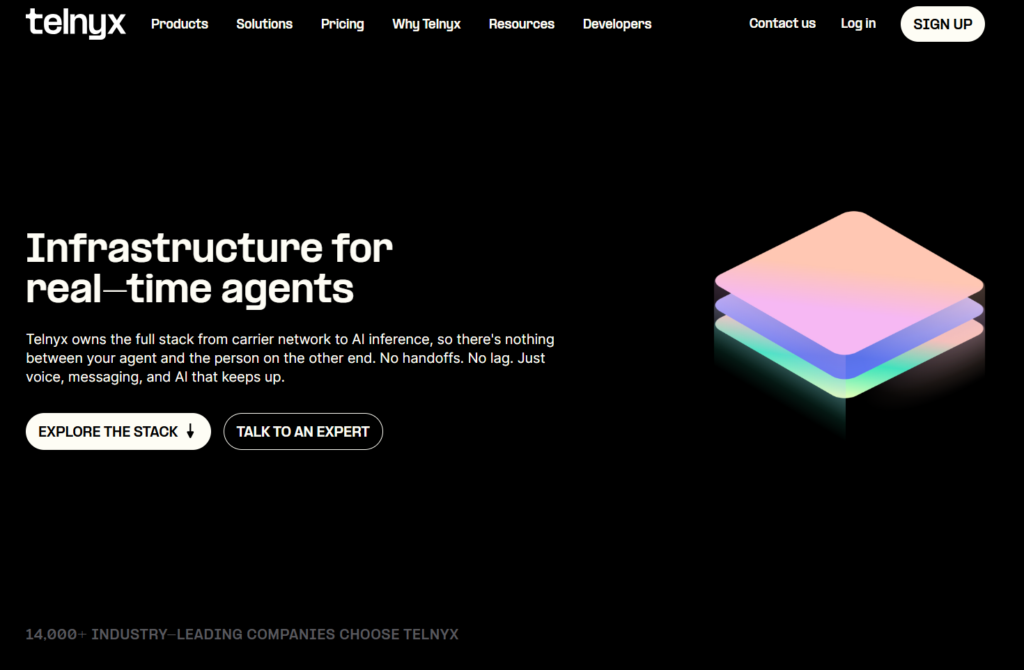
Telnyx
Rating: 4.7/5 on G2
Telnyx is one of the few providers in this comparison that combines telephony infrastructure, AI inference, and voice services under a single platform. Everything runs on one private IP backbone. That matters because every vendor hop in a voice call adds latency. When your telephony provider, your AI model host, and your speech provider are three separate companies, that latency compounds on every turn. Telnyx removes all of it.
What it covers
- Inbound and outbound phone calls over the PSTN (no third-party carrier needed)
- Real-time speech-to-text and text-to-speech, both running on the same network as the call
- LLM inference with open-source models, co-located with the call path
- Full call control: DTMF, warm transfers, live recording, SIP interoperability
- Global number provisioning in 140+ countries
Performance
- Sub-200ms round-trip latency on real-time voice, the lowest of any provider in this comparison
- Carrier-grade uptime on a Tier-1 private network, not the public internet
- Scales to millions of concurrent calls without performance degradation
Compliance
- SOC 2 Type II, HIPAA, PCI DSS, ISO 27001, GDPR
- EU-deployed infrastructure for in-region data residency
- One vendor relationship covers the entire call path, with no sub-processor compliance gaps
Verdict: Telnyx is the strongest choice for teams building voice AI that needs to work at scale. If latency, compliance, and cost predictability all matter, no other provider offers the same combination.
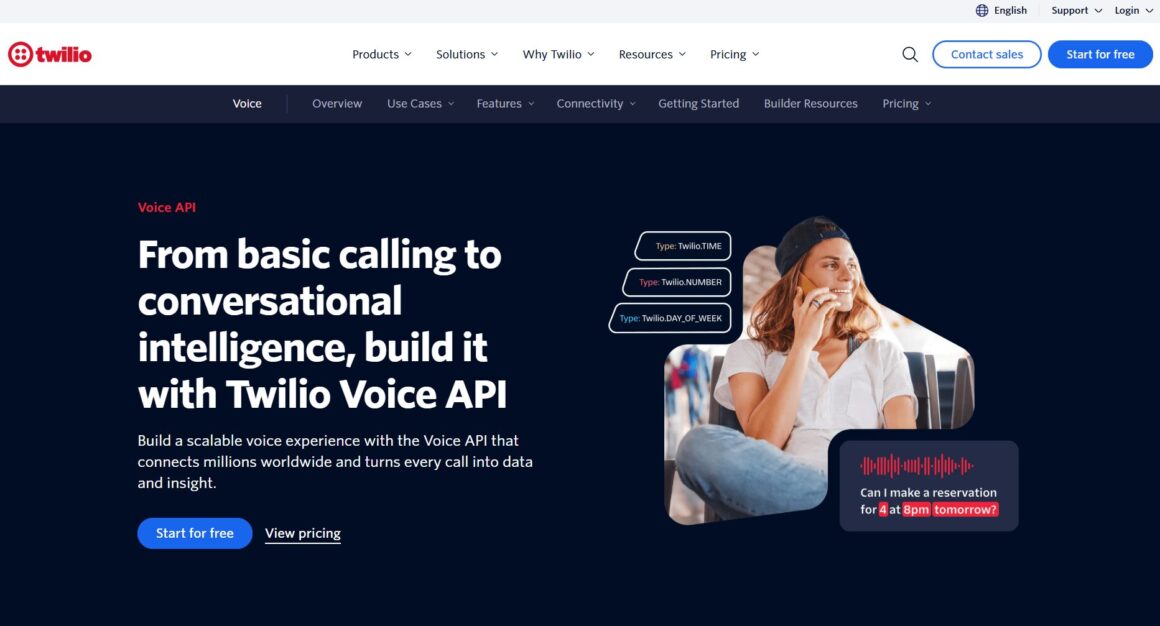
Twilio Voice
 Rating: 4.2/5 on G2
The voice APIs of Twilio are mature, and its developer ecosystem is large.
To build a real AI voice agent on Twilio, you have to connect its telephony to a separate speech-to-text provider, a separate model host (OpenAI, Anthropic, or similar), and a separate text-to-speech service.
What it covers
- Inbound and outbound calls over the PSTN
- Basic speech recognition and transcription via Twilio Voice Intelligence
- ConversationRelay for streaming real-time audio to an external AI model
- Broad global phone number availability in 100+ countries
Performance
- Latency varies depending on which STT, LLM, and TTS providers you connect to
- Multi-vendor architecture means p95 latency is harder to control
- Network runs largely over the public internet between regions
Compliance
- SOC 2 Type II, HIPAA (available as an add-on with BAA), GDPR
Verdict: Pick Twilio if you’re already standardized on it and want to extend into AI voice without switching platforms. Don’t pick it if latency and cost efficiency are top priorities.
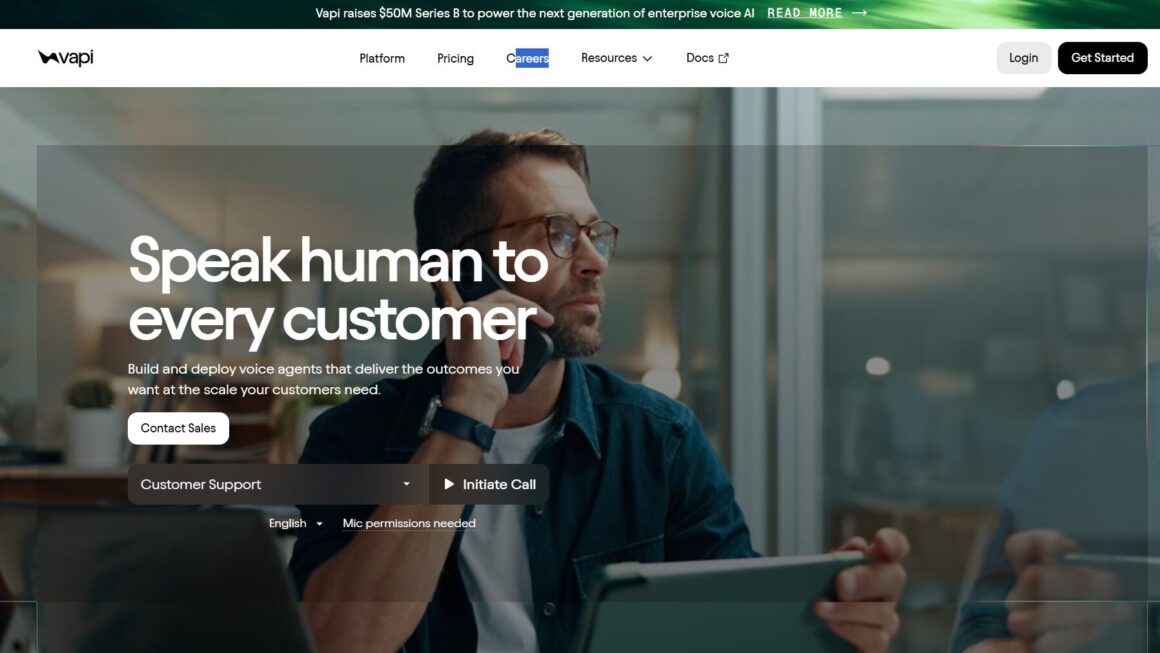
Vapi
 Rating: 4.2/5 on G2
Vapi is a developer-first platform that lets you build and deploy AI voice agents. A developer can have a working AI phone agent running in a few hours.
What it covers
- Inbound and outbound phone calls via Twilio, Vonage, or your own SIP trunk
- Support for any LLM: GPT-4o, Claude, Gemini, Llama, and others
- Function calling and tool use during live calls
- Dashboard for call monitoring and analytics
Performance
- Latency depends heavily on which providers you connect to
- No private network: calls are routed through third-party carriers
Compliance
- SOC 2 Type II, HIPAA, GDPR
- PCI coverage depends on which carrier and model providers you use
Verdict: Vapi is the right pick for teams that need to prototype fast and aren’t yet operating at high call volumes. For production deployments with strict compliance or latency requirements, it falls short.
Retell AI
 Rating: 4.8/5 on G2
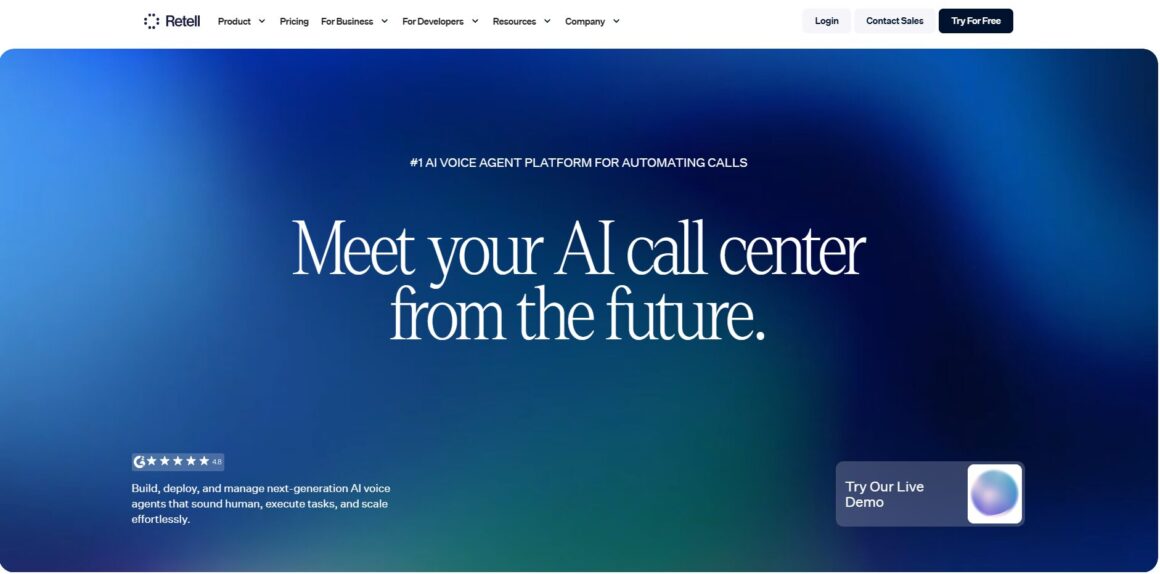
Retell AI is an AI voice agent platform focused on customer support and sales use cases.
What it covers
- Inbound and outbound phone calls via Twilio or Telnyx as the carrier
- Configurable turn-taking: control how long the agent waits before responding, how it handles interruptions
- Pre-built agent templates for common use cases (appointment booking, lead qualification, customer support)
- Real-time transcripts, call summaries, and sentiment analysis
- CRM integrations and webhook support
Performance
- Turn-taking and interruption
- Latency is carrier-dependent: Retell itself adds minimal overhead
- Some deployments actually use Telnyx as the underlying carrier, which improves latency
Compliance:
- SOC 2 Type II, HIPAA, GDPR
Verdict: Retell is a solid pick for teams building support or sales agents that need precise control over how the agent sounds and behaves in conversation. Less suitable for teams that need carrier-level infrastructure control.
Bland AI
 Rating: 5.0/5 on G2
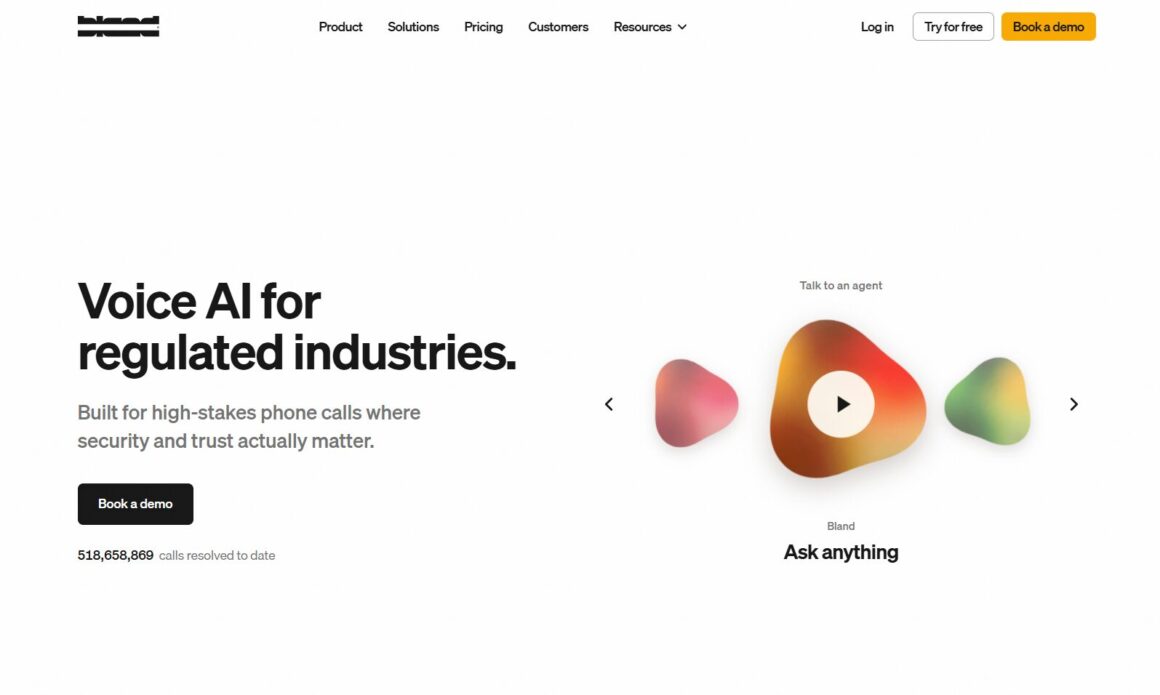
Bland AI offers a self-hosted option that runs on dedicated GPU clusters, which means your call data doesn’t touch shared infrastructure. The platform doesn’t own its carrier network: calls go through third-party telephony providers, but the self-hosted GPU option gives regulated enterprises more control than most other alternatives.
What it covers
- Inbound and outbound phone calls via third-party carriers
- Conversational Pathways: a visual builder for complex call flow logic
- Real-time transcripts and post-call analytics
Performance
- Latency varies by deployment type: managed cloud vs. self-hosted
- Self-hosted GPU option removes shared infrastructure latency
Compliance:
- SOC 2 Type II, HIPAA, GDPR, PCI DSS
Verdict: Bland is worth evaluating if you need a self-hosted option and have the engineering capacity to run it. For teams that want managed infrastructure with equivalent compliance coverage, Telnyx is a simpler path.
Which Provider Should You Use?
The right choice depends on what you’re actually building and how far along you are.
If you’re building for production at scale, a regulated industry, needs low latency, Telnyx is the clear choice. It’s the only provider that owns the full stack and has the compliance certifications to match.
The biggest mistake teams make is treating voice AI as a software problem. It’s an infrastructure problem. The latency that breaks a voice agent doesn’t come from the model: it comes from the number of network hops between the model and the phone call. That’s why platform choice matters more in voice than in almost any other AI category.
About The Author